
In previous blog posts, I explained why starting with 3D learning can be more beneficial for children. However, I would like to emphasize that not all children need this learning approach. In this article, I will focus on which types of children benefit most from learning with 3D materials before moving on to 2D, and why this learning sequence can be more effective for building cognitive understanding.
I will use different examples to explain the learning characteristics of several groups of children, hoping to help parents identify their child’s needs more easily.
Some children can accurately point to a picture card of a doll but are unable to identify the actual doll in real life. This situation is very common, as schools often rely heavily on flat, 2D materials for teaching—such as books, picture cards, and computer screens.
As a result, some children develop a learning pattern where they focus on memorizing images rather than understanding concepts. For example, when learning object concepts, they may try very hard to remember pictures of objects such as fruits, vehicles, or toys. However, they are only remembering what the picture looks like, not truly understanding the concept of the object itself.
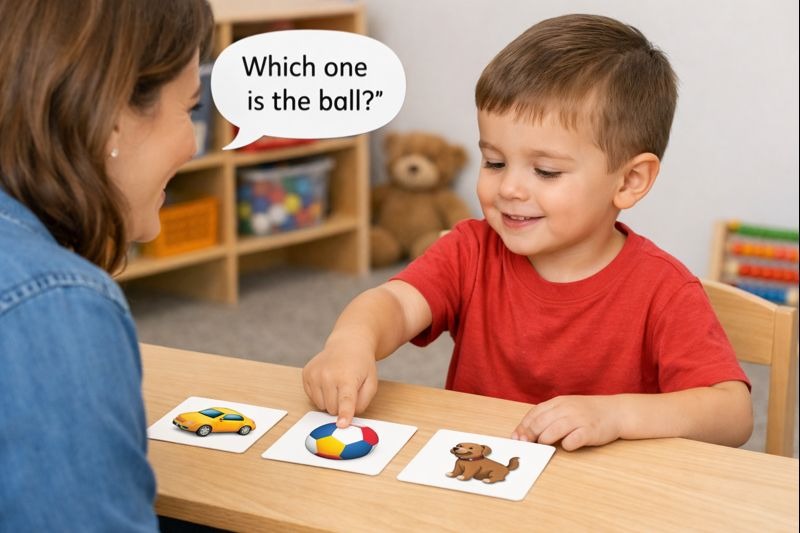
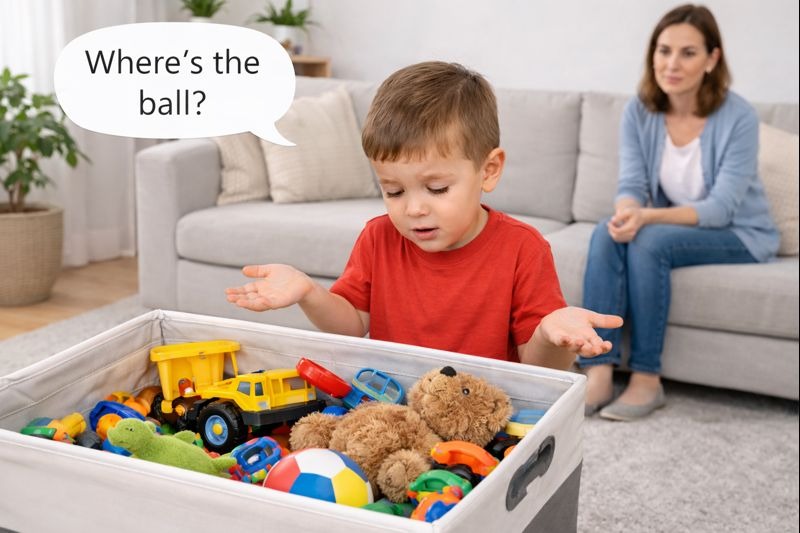
For instance, a child may be able to correctly point to a picture card of a ball when asked, “Which one is the ball?” But when asked to find a ball in a toy box at home, the child may be unable to do so. This happens because the child learned the concept only through 2D picture cards and did not build a proper understanding of what a ball is—such as the fact that a ball can roll on the ground or be kicked. Instead, the child may believe that any round object in a picture is a “ball.”
In this situation, starting with 3D learning is more suitable. Using real objects helps children build a correct and meaningful understanding of the object, making it easier for them to later connect the real object with pictures.
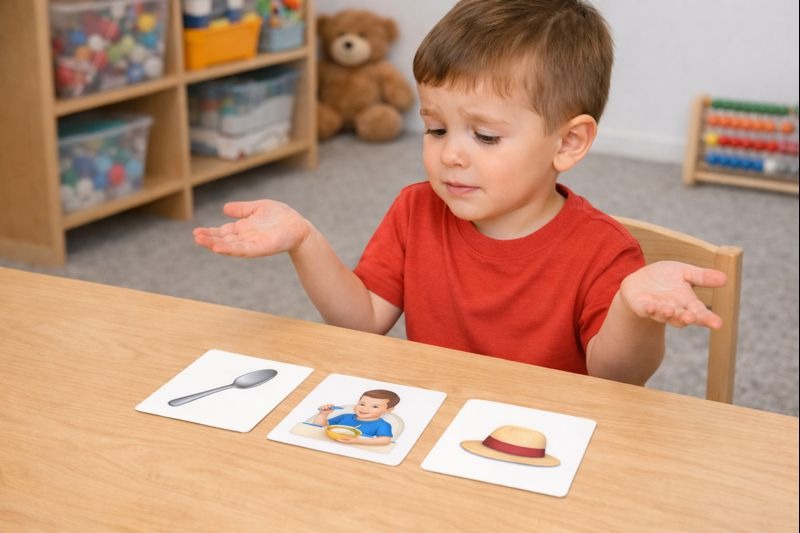
Some children struggle to learn abstract concepts and need hands-on experience to build understanding. For example, when learning about “object use,” they may be unable to match a picture of a spoon with a picture of eating using picture cards alone.
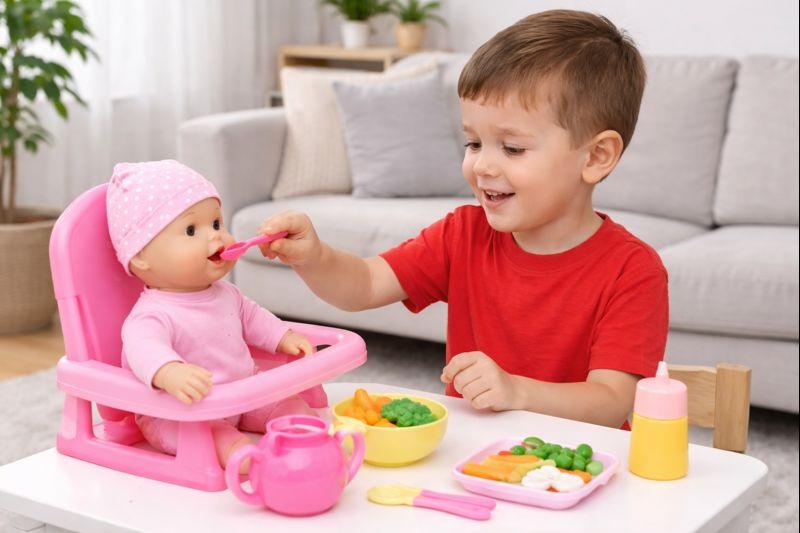
These children need real objects and real-life interaction to understand concepts such as object use. For example, using pretend-play toys and allowing the child to put a spoon into a doll’s mouth helps them understand the function of a spoon. Through real actions—touching, holding, and using—children can learn the purpose of objects more easily than through abstract picture cards.
Some children find it particularly difficult to learn concepts such as object use, function, size, or direction through 2D materials alone. In these cases, using 3D materials to build cognitive understanding can reduce rote memorization and support deeper learning.
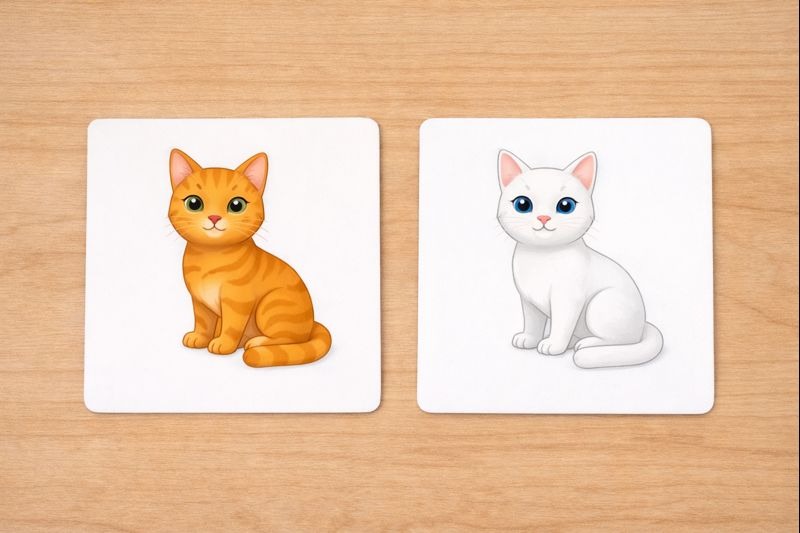
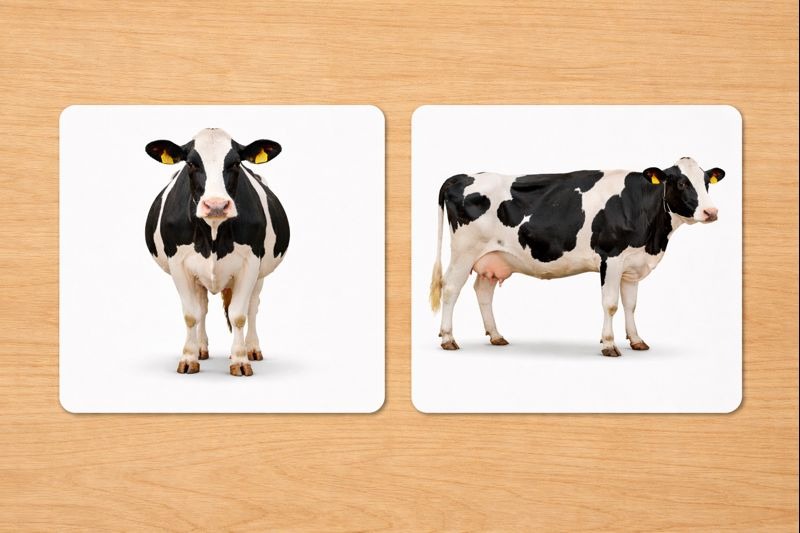
What does “only recognizing one version” mean? This issue can appear in many ways. For example, a child may only recognize a cat if it is orange but fail to recognize a white cat; only recognize a cow from the front but not from the side; or recognize a computer chair but not a wooden chair.
These children often build their understanding of objects based on a first impression. When an object changes in form—such as its angle, color, or size—they perceive it as a completely new object or concept.
Starting with 3D learning helps these children observe objects more thoroughly and build a more accurate and complete understanding of what the object truly is. In a previous article, I explained how 3D learning helps build accurate cognitive understanding. If you are interested, you may want to read that article as well.
Of course, there are many other observations and factors to consider when understanding a child’s learning style. However, if your child shows learning difficulties similar to the situations described above, you may want to consider introducing 3D learning first whenever they are learning a new concept.
By using 3D materials to build understanding of concepts such as objects, space, or shapes, and then extending learning with 2D materials, children may develop a more accurate and meaningful understanding of cognitive concepts. I hope this article helps make your child’s learning journey a little easier and more effective.